How Remote Hockey Play-by-Play Is Changing the Game
Hockey broadcasting is changing fast.
And I think remote play-by-play is going to become a much bigger part of it.
Years ago, if you wanted to call a hockey game, you had to be in the rink.
You needed a broadcast booth, an engineer, a producer, equipment, travel and usually a pretty big production setup.
Now?
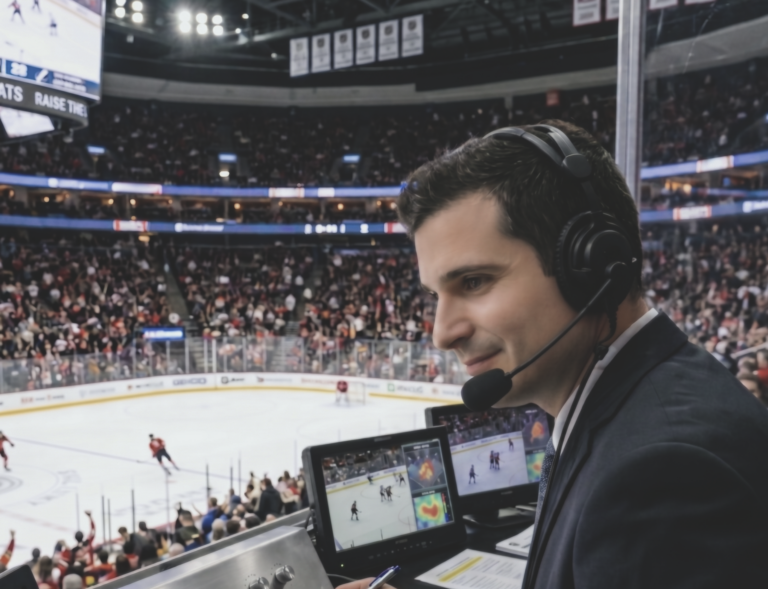
You can call a professional game from your own studio.
And if the setup is done properly, the person watching at home may have no idea you are hundreds or even thousands of kilometres away from the arena.
That is a pretty big shift.
What Is Remote Hockey Play-by-Play?
It is basically exactly what it sounds like.
You are calling the game live, but you are not physically at the rink.
You receive the live video feed.
You communicate with the producer.
You have your stats, rosters and game notes in front of you.
Then you call the game just like you would from the broadcast booth.
Your audio gets sent back to the production team and added to the broadcast.
Simple idea.
But the technology behind it has improved dramatically.
And that is opening a lot of doors.
Why I Built My Own Remote Broadcast Studio
I have called more than 400 hockey games over the years.
AHL.
OHL.
Memorial Cup.
NHL radio.
When I was doing most of that work, you went to the rink.
That was just how broadcasting worked.
Today I have a fully equipped remote broadcast studio at home.
I built it because I want to be ready for where sports broadcasting is going.
Not five years from now.
Now.
I can receive a game feed, monitor audio, communicate with a producer and call a hockey game without leaving the studio.
And the goal is not to sound like some guy sitting at home talking into a computer.
It needs to sound like a broadcast.
Rich audio.
Clean sound.
No echo.
No garbage laptop microphone.
If someone closes their eyes and listens, it should sound like I am sitting in the rink.
That is the standard.
You Do Not Need a Crazy Expensive Studio
This was probably the biggest thing I learned while putting my setup together.
You do not need a television network budget.
You need the right pieces.
A good microphone.
An audio interface.
Headphones.
A solid computer.
Fast and reliable internet.
A quiet space.
And whatever communication or broadcast software the production company is using.
That is really the core of it.
You can obviously spend a fortune on microphones, mixers and acoustic treatment.
You do not have to.
Get the basics right first.
Especially your microphone and your internet connection.
Your voice and your connection are the two things you cannot afford to have fail during a live game.
The Microphone Matters
This one is obvious, but people still cheap out on it.
If you want to do remote sports broadcasting, your voice is your product.
It has to sound good.
A proper broadcast microphone connected through an audio interface will sound completely different from a built-in laptop microphone or cheap USB headset.
You want some warmth.
You want clarity.
You want your voice to have presence without sounding like you are yelling into a tin can.
I spent time building my setup specifically around that.
I want the sound to feel like radio.
Because hockey play-by-play should sound big.
Remote Does Not Mean Easy
This is something worth saying.
Technology makes broadcasting more accessible.
It does not make play-by-play easy.
You still have to call the game.
You still need to identify players instantly.
You still need to understand what is developing.
You need to know when to talk.
And sometimes even more important, when to shut up.
For me, the best part of play-by-play has always been the build.
Not just the goal call.
It is the rush developing through centre.
The winger coming down the boards.
The d-man jumping into the play.
The pass coming across.
Then the shot.
That buildup is what creates the moment.
The goal call is just the payoff.
Remote broadcasting does not change any of that.
Can You Get Hired Doing Hockey Play-by-Play From Home?
Absolutely.
But you still have to do the work.
There are more places looking for commentators now than there were years ago.
Streaming companies.
Junior hockey teams.
Minor pro leagues.
University and college sports.
International hockey.
Tournaments.
Digital sports networks.
Remote production companies.
There are also companies specifically built around remote commentary.
That means your location matters less than it used to.
A broadcaster sitting in Ontario could potentially call a game happening in British Columbia, Florida, Europe or Australia.
That is pretty wild when you think about it.
How Do You Actually Get Hired?
This part has not changed as much as people think.
You need a good demo.
Not a 15-minute masterpiece.
A producer is probably going to decide pretty quickly whether they like your voice and your style.
Your demo needs to show that you can follow the play.
That you know the game.
That you can build excitement naturally.
That you can identify players.
And that you sound like someone they could put on a broadcast tomorrow.
Then make yourself easy to find.
Have a website.
Put your demo right there.
List your experience.
Make it clear that you are remote-ready.
Then start contacting people.
Teams.
Leagues.
Producers.
Streaming companies.
Production companies.
Broadcast directors.
Commentator coordinators.
Do not just wait for someone to discover you.
Go find the work.
One Big Advantage of Remote Broadcasting
This might be the biggest opportunity of all.
You are no longer limited to your own city.
That changes the entire job market for broadcasters.
If a producer likes your work and you have the right studio, you could potentially call their game from anywhere.
No airfare.
No hotel.
No travel day.
No bringing in a broadcaster from another city.
That makes hiring experienced talent a lot easier.
It is good for broadcasters.
And it can be really good for leagues trying to produce more games without exploding their production budget.
The Technology Changes. The Job Does Not.
This is the part I keep coming back to.
We can talk about microphones.
Software.
Internet connections.
Remote production.
Cloud broadcasting.
All of that is important.
But the job is still the job.
Make the game come alive.
Tell people what is happening.
Build the story.
Bring energy when the game gives you energy.
And make the person watching or listening feel something.
That is hockey play-by-play.
Whether you are sitting in an arena or calling the game from a studio at home.
Need a Remote Hockey Play-by-Play Broadcaster?
I’m Mike Tangreda.
I have called more than 400 hockey games, including the AHL, OHL, Memorial Cup and NHL radio.
I now operate a fully equipped remote broadcast studio and I am available for live hockey play-by-play and remote commentary opportunities in Canada, the United States and internationally.
You can hear my demo here.