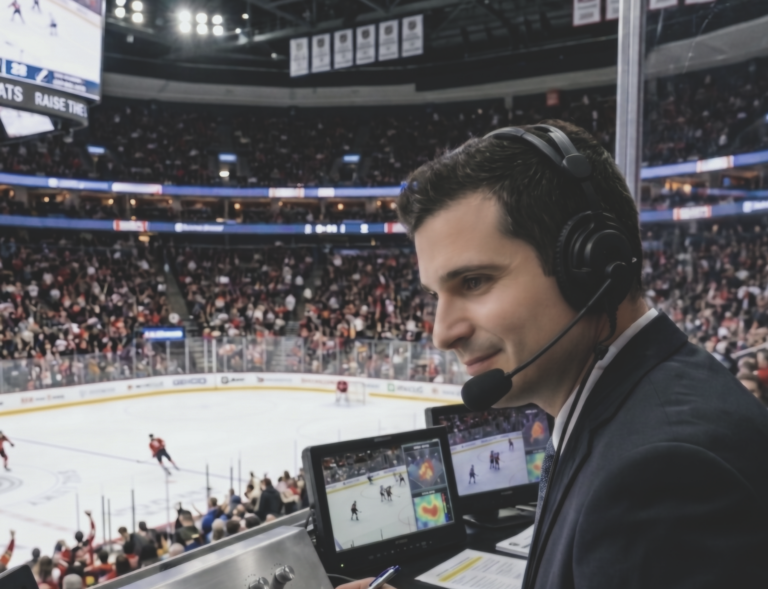
The Broadcast Starts Long Before Puck Drop
A great hockey broadcast should feel natural, but natural does not mean unprepared.
The goal is to make the game sound smooth, clear, and in the moment. That only happens when the work has already been done.
For me, preparation is not something I do right before the game. It starts well before puck drop.

Preparation Creates Confidence
Before every game, I spend time researching team trends, player storylines, injuries, special teams, and statistics that may become important during the broadcast.
I also believe preparation goes beyond simply reading numbers on a page.
Whenever possible, I like speaking directly with coaches, staff, and people around the team to better understand what may not show up on the scoresheet.
Sometimes it is a player battling through an injury.
Sometimes it is a line combination quietly finding chemistry.
Sometimes it is a young player gaining confidence behind the scenes.
Those details matter because they help bring more depth and authenticity to the broadcast.
Memorization Matters More Than People Think
Another part of preparation that often gets overlooked is memorization.
Names
Stories
Numbers
Statistical notes.
Pronunciations.
At the pace hockey moves, there is no time to search for information during the play.
You need to know it instantly.
That preparation allows the broadcast to sound smoother, more natural, and more connected to the flow of the game.
The Goal Is to Sound Prepared Without Sounding Scripted
The best broadcasts do not sound forced or overly rehearsed.
Preparation should create freedom, not stiffness.
When you truly know the teams, players, and situations, you can react naturally while still delivering information clearly and confidently in real time.
That balance has always been something I take pride in as a broadcaster.
Because at the end of the day, preparation is what allows you to fully focus on the moment once the game begins.